
 If you are a new parent, you might have noticed that it’s a lot harder to get sleep these days than it was before your new baby came along.
If this is a situation that you are currently dealing with – I feel your pain. I have 4 kids and the youngest is just 15 months, so this is something I’ve had to deal quite a bit over the past few years!
This all being said, if you are reading this review I can only assume that you are desperately seeking a solution so that you can help your little guy or girl sleep through the night – so they get that all of the vitally important rest that they need so that they can grow and develop properly – and so that you can get some sleep too – so you don’t go completely INSANE!
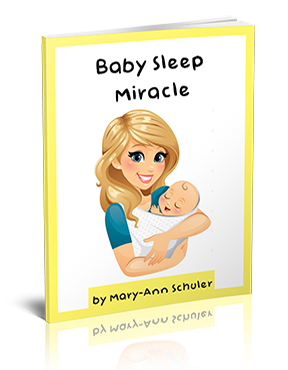
That brings us to the topic of today’s review – a program called Baby Sleep Miracle by a woman named Mary-Ann Schuler…
So – what is this Baby Sleep Miracle program all about? Is it any good? Anything new and interesting? And most importantly, will it actually work to help your baby sleep through the night?
I was curious – so I checked it out and have provided a complete, yet straight to the point honest review below. Check it out and feel free to drop me a line in the comments and let me know what you thought if you decide to give this system a shot!
SPECIAL: DISCOUNT on Baby Sleep Miracle Click Here To Order Now (Limited Time Offer!)
What’s Baby Sleep Miracle All About? (Basic Program Info)
As I mentioned this program was created by Mary-Ann Schuler who is not only a clinical psychologist specializing in child psychology and sleep patterns but she’s also a mom herself, so she has both professional as well as personal experience dealing with these issues. (She has also been published in “Parenting Magazine”, “Easy Parenting”, “Parents” and so forth – more of less the cream-of-the-crop of parenting magazines…)
Basically Mary-Ann designed her “Baby Sleep Miracle Guide” to give parents the simplest and easiest-to-apply solution to quickly regulate their child/children’s sleep patterns so they can put all of the misery of being up all night (and having their kids up all night) behind them.
Now like I said, I’ve sleep trained 4 babies in my time, so this is a subject I know a thing or two about, and I’ve read numerous books and articles on the topic, because honestly I found it very tricky figuring out the best way to go about this.
I don’t know about you, but the “cry it out” methods were very difficult for me (yeah, I tried them) and a lot of experts say that these methods AKA “Ferberizing” can actually cause damage – whether its emotional/psychological/etc…
I don’t know if this is actually TRUE, but the potential for that kind of bad outcome is definitely something you may want to consider before going down that path. Plus even if those methods were “harmless” its still not easy listening while your baby sobs and wails him or herself to sleep in a room alone (thats not fun.)
Anyhow – I was interested in Mary-Ann’s system, because it is NOT a a cry yourself to sleep method, and apparently a lot of parents have used it quite successfully, and it’s truly a unique system that I had not heard of anywhere before…
How Does The “Baby Sleep Miracle” System Work?
Like I said, this is NOT a method where you let your child cry themself to sleep.
In fact – Mary-Ann claims that sleep training like Ferberizing are actually scientifically proven to cause serious harm to your child citing a Harvard study that apparently shows they can cause long-lasting damage to a child’s nervous systems and leave them more susceptible to anxiety disorders and panic attacks later on in life. Yikes!
Now I haven’t dug to deep into those studies, but they definitely exist and a lot of other baby sleep experts agree Mary-Ann with her on the fact that they are not a good option.
What is the alternative?
Well, The Baby Sleep Miracle system can be thought of a set of clinically proven “sleep-tricks” and techniques that you can start using right away to instantly calm your baby down so they can drift off to a full night of restorative sleep.
Examples include: a method for laughing together before bed to help your little one release any tension and anxiety that they have built up inside themselves over the course of the day, putting them to bed at the perfect time to avoid a spike of stress hormones that occurs later in the evening, and playing a special type of noise “Miracle Sounds” that are scientifically proven to help your little one feel safe and secure so that they can fall asleep almost instantly.
This system is also unique in that it takes your baby’s personality into consideration and is fully adaptable to their unique disposition. Additionally Mary-Ann includes specific instructions for using this method in any of 9 specific age groups.
What Do You Get With The Baby Sleep Miracle Program?
The Baby Sleep Miracle Program includes Marry-Ann Schuler’s complete step-by-step guide for holistically regulating your baby or young child’s sleeping pattern in a PDF format (there is also a hard copy version available – see details below).
Because it is in PDF format you get instant access to the complete guide as well as a collection of bonus trainings including: “Night Terror Stopper” which provides simple steps you can use to ease away your child’s fears and allow them to get an undisturbed and peacefully nights rest.
Parents of twins or more than one child will also probably appreciate the “Double-Trouble Sleeping Struggle” bonus which is all about helping twins and siblings go to sleep easily and stay asleep peacefully. This is a topic I’ve researched a bit and I have found to be woefully under addressed elsewhere – Its a struggle! And Mary-Ann has some great tips and tricks on this that I’ve never seen elsewhere.
Plus the big bonus here, probably the best part of the whole system is Mary-Ann’s “Miracle Sounds” bonus. For me this is what it’s all about, and you can’t get them anywhere else.
Pros & Cons Of Baby Sleep Miracle:
PRO – Works Fast – This is key. Some parents report that they have gotten overnight results following Mary-Ann’s guide. According to Mary-Ann, due to the fact that every baby is a unique – while you may see overnight results it more likely will take anywhere from a couple of days to a couple of weeks to see really substantial results. In my opinion though, even two weeks is really quick compared to some of the other methods that I have (unsuccessfully) tried, that took a lot longer to see any result from and that ultimately failed.
PRO – Safe To Use – For most parents nothing is more important than keeping their baby safe and helping them to grow up healthy and well adjusted. And unlike other sleep training methods that we discussed earlier that some believe can cause some pretty serious damage – Baby Sleep Miracle is a safe, natural and proven system designed to gently lead your baby to sleep. TL;DR: It’s 100% safe for children of all ages.
PRO – Satisfaction GUARANTEED – Mary-Ann is so confident in her product that she guarantees you’ll be completely satisfied or she’ll give you a full and instant “no questions asked” refund.
PRO – YES, A Physical Version IS Available – When I first wrote this review I wrote this as a con because I thought that there was NO physical version available… However, there actually IS a physical version available. When you go to Mary-Ann’s website and click the “Add to Cart” button and go to the checkout page, you can see if you scroll down on the page it gives you the option to add on a “Baby Sleep Miracle Physical Version” to your order.
This is great for people like me who are sick of looking at their phones and computer screens all day and don’t want to have to bother with printing it all out.
CON – Not As Cheap As Some Books – This program is more expensive than most softcover books and even many hardcovers. That said, it comes with two bonus books AND the Miracle Sounds which is in itself well worth the price of the program. And more importantly I believe this program is much, much more likely to work for you than any system in some book elsewhere.
When my youngest baby was keeping me up all night I would’ve paid for this program on a DAILY basis, just to get a good nights sleep.
Where To Buy Baby Sleep Miracle
Baby Sleep Miracle is not available in retail stores, on Amazon or on any other websites online.
To be sure you don’t end up with a fake bootleg version of the program, its recommended that you only buy directly from Mary-Ann’s website through the links provided in this review.
Purchasing through the links provided will also ensure that you get all bonuses and are eligible for the full money back guarantee. Click Here To Visit The Official Baby Sleep Miracle Website Now
The Verdict:
As I mentioned I’ve felt the pain of extreme sleep deprivation caused by babies that don’t want to sleep. For somebody like me who really needs their sleep, this system truly is a miracle.
No matter if you have already tried other methods, or if you are just getting around to addressing this issue now, I highly recommend getting Mary-Ann’s guide and following it to the letter. I think you’ll be very glad that you did!
>> Click Here To Get Instant Access To Get Baby Sleep Miracle Now (Special Discounted Offer Available Now – Limited Time Only!)